3D Sketch: Urban Style with a Modern Edge
When you're working on a project that needs to feel current, energetic, and undeniably cool, the typeface you select does a lot of heavy lifting. It’s not just about legibility; it’s about setting a specific mood instantly. For designers, entrepreneurs, and content creators looking to inject some urban attitude into their work, 3D Sketch offers a compelling solution. This isn't your standard, safe choice. It’s a display font with a distinct personality, designed to capture attention and convey a sense of modern, street-inspired style. If your goal is to stand out in a crowded market, understanding how to wield a creative font like this is a valuable skill.
The Visual Personality of 3D Sketch
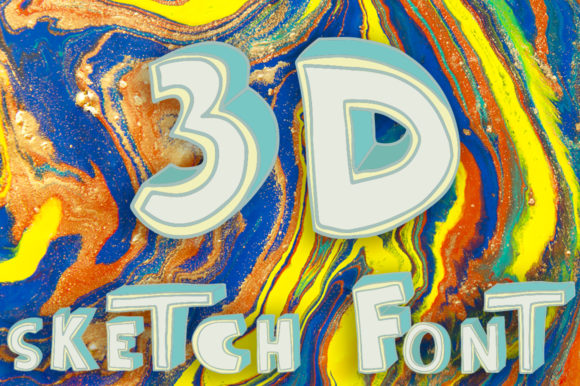
At its core, 3D Sketch is defined by its dimensional effect and hand-drawn aesthetic. The letterforms have a constructed, almost isometric quality, giving them a tangible presence on the screen or page. This isn't a flat, sterile typeface. The "sketch" element introduces a slight imperfection and organic feel, preventing it from looking overly mechanical. Think of it as the intersection of graffiti art and precise digital design. The overall appeal lies in its ability to be both bold and approachable. It’s a premium font that doesn't take itself too seriously, making it perfect for brands and projects that want to project confidence without pretension.
Where This Typeface Truly Shines
The strength of a display font like 3D Sketch is in headlines, logos, and short, impactful text. Its detailed structure means it’s not designed for body copy in a long-form article, but for that single, powerful statement. In logo design, it can create an immediate identity for a streetwear brand, a music festival, a gaming channel, or a trendy urban café. For packaging design, especially for products targeting a younger demographic—like craft beverages, snacks, or tech accessories—it adds instant shelf appeal.
In the digital realm, it’s a powerhouse for social media graphics. A quote card, a sale announcement, or a channel intro using 3D Sketch will stop the scroll. It translates well to web design for hero sections, event banners, or interactive elements where you want a touch of flair. For print, consider it for magazine covers, poster designs, or event flyers where the goal is to generate excitement. Even in editorial design, it can be used sparingly for pull quotes or section headers to break the visual monotony and inject energy.
Building a Brand with Dimensional Type
Choosing a typeface is a foundational part of building a brand identity. Selecting 3D Sketch signals that your brand is contemporary, creative, and perhaps a little rebellious. It influences perception before a single word is read. For a small business owner, this can be a strategic move to differentiate from competitors using more conventional serif or sans serif font families. It creates immediate recognition; people will associate that unique 3D, sketched look with your brand.
However, this power comes with responsibility. Using such a distinctive typeface requires consistency. It should become a recognizable element across all your materials, from your website header to your invoice template, to build that strong mental link for your audience. Overusing it can dilute its impact. The key is to treat it as a headline or accent font, pairing it with a simpler, highly readable serif font or sans serif font for longer passages of text. This creates a clear visual hierarchy and ensures your message is both seen and understood.
Practical Application: Making the Right Choice
Before committing to 3D Sketch for a major project, run it through a practical evaluation. First, consider your audience. While it appeals to a wide range, its core resonance is with adults aged 20-50 who are engaged with contemporary culture, design, and media. If your project is for a law firm or a traditional financial institution, it might not be the right fit. For a lifestyle blog, a podcast, or a marketing agency, it could be perfect.
Next, test it in context. Don't just look at it in a font preview. Mock up your actual design. Create a sample social media post, a draft logo, or a layout for a brochure. How does it look at the size you'll use it? Check the readability of its key characters. The dimensional effect, while stylish, can sometimes merge similar letters at very small sizes. Ensure numbers and punctuation also have the style you need.
Font pairing is critical. A bold, decorative typeface like 3D Sketch needs a calm partner. Try pairing it with a clean geometric sans serif font like Montserrat or Poppins for a modern, tech-friendly feel. For a slightly warmer, more editorial contrast, a simple serif font like Lora or Merriweather can work beautifully. Avoid pairing it with another decorative, handwritten font, or script font, as this will create visual chaos and harm professionalism.
Finally, understand the licensing. As a commercial font, you need to ensure you have the correct license for your use. Most font pairing sites and foundries offer different licenses for desktop (print, logos), web (embedding via CSS), and applications. For a small business, a standard desktop license might cover your print and logo needs, but if you're building a website, you'll likely need a web font license. Read the terms carefully to avoid legal issues down the line. Investing in quality design assets like a properly licensed typeface is a mark of a serious creator or business.
In the end, 3D Sketch is more than just a collection of letters. It's a tool for storytelling, a way to inject personality and visual interest into a project. Used thoughtfully, it can elevate your design, strengthen your brand's voice, and create a memorable connection with your audience. Its value lies not in being used everywhere, but in being used in the right place, at the right time, to make the right impact.