Look Forward: A Display Font for Joyful, Standout Design
There's a particular kind of design challenge that calls for something beyond the standard toolkit. You're working on a project that needs to feel optimistic, approachable, and genuinely memorable—something that makes people smile before they've even read the first word. That's exactly where a typeface like Look Forward earns its place in your creative arsenal. This isn't a font that whispers; it arrives with personality and settles into your work with an infectious sense of warmth.
Understanding the Personality Behind the Letterforms
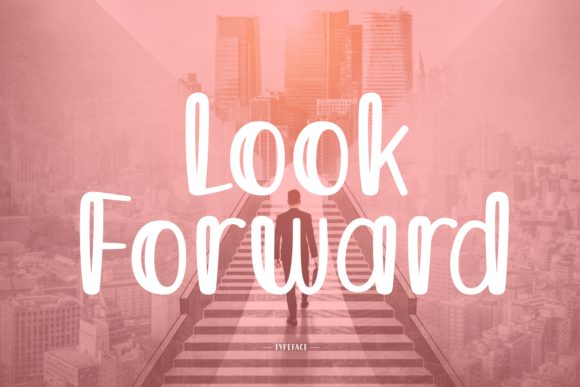
Look Forward is a display font with a distinctly cute and quirky character. The letterforms carry a rounded, friendly quality that feels both modern and whimsical. Each character seems to have its own subtle personality—slightly uneven baselines, playful curves, and a hand-crafted sensibility that gives the impression of carefree creativity rather than rigid precision. It's the typographic equivalent of a sunny afternoon: lighthearted, inviting, and impossible to ignore.
What makes Look Forward particularly interesting is that it manages to be expressive without becoming illegible. Some decorative fonts sacrifice readability for flair, but this typeface maintains a clear letter structure even at smaller sizes. The quirky details—perhaps a slightly tilted crossbar here, a bouncy terminal there—add character without confusing the eye. This balance is what separates a well-crafted creative font from one that's merely decorative.
Where This Font Truly Shines
Think about the projects where tone matters as much as content. Children's book covers, bakery branding, lifestyle blogs, handmade product labels, wedding stationery, wellness app interfaces, pet shop signage, artisan food packaging—these are environments where a font like Look Forward doesn't just fit in, it elevates the entire visual conversation.
In logo design, this typeface works beautifully for brands that want to communicate approachability and joy. A small business selling organic baby clothes, a neighborhood café with a playful menu, or a creative workshop studio could all build their brand identity around the warmth that Look Forward naturally exudes. It tells customers, "We're friendly, we're creative, and we care about the details."
For packaging design, the font brings an artisanal, handmade quality that resonates with consumers who value authenticity. Imagine it on a jar of small-batch honey or a box of handcrafted chocolates—the letterforms themselves become part of the product's story. The display font nature means it's designed for headlines and short bursts of text, where it can command attention without competing with the rest of your layout.
Social media graphics are another natural home for Look Forward. In a feed crowded with content, a distinctive typeface can be the difference between a scroll-past and a pause. Quotes, announcements, sale promotions, and story overlays all benefit from a font that injects personality instantly. The joyful quality of this typeface makes it particularly effective for content aimed at audiences who respond to warmth and authenticity over corporate polish.
Pairing Look Forward with Other Fonts
One of the most practical considerations with any display font is how it interacts with your body text. Look Forward is not designed to set paragraphs—it's built for moments of emphasis. Pairing it with a clean sans serif font for body copy creates a satisfying contrast: the personality of the headline meets the clarity of the supporting text. Think of a font pairing like Look Forward with a neutral, geometric sans serif for web design or editorial layouts. The display font draws the reader in; the body font keeps them reading comfortably.
For projects with a more traditional or literary feel, combining Look Forward with a modest serif font can work surprisingly well. The contrast between the playful display type and a classic text serif creates visual tension that feels intentional and sophisticated. This approach suits editorial design for lifestyle magazines, recipe books, or creative portfolios where you want personality without sacrificing readability in longer passages.
Avoid pairing it with other highly expressive fonts—a script font or another handwritten font alongside Look Forward would likely create visual noise rather than harmony. The rule of thumb is simple: if your headline has personality, let your body text play a supporting role.
Practical Considerations for Real Projects
Before committing any premium font to a project, test it in context. Set your actual headlines, not just the alphabet. Check how it reads at the sizes you'll actually use. Look at it on screen and in print if your project spans both web design and physical materials. A font that looks delightful at 72 points on your monitor might lose its charm at 18 points on a business card.
Review the character set and any included styles or weights. A well-equipped commercial font will often include alternates, ligatures, or extended language support that can solve specific design problems. Knowing what's available before you start designing prevents frustration later and opens up creative possibilities you might not have anticipated.
Licensing is another practical checkpoint. If you're a small business owner using the font for your logo, merchandise, and website, confirm that the license covers your intended use. Most design assets come with clear licensing terms, but it's worth verifying before you build a brand identity around a typeface you may need to replace later.
Look Forward works best when you let it do what it does naturally—bring joy, create warmth, and make your designs feel human. It's not the right choice for every project, and that's perfectly fine. No single typeface is. But when your creative work calls for something that feels optimistic and genuinely inviting, this is a font worth reaching for. Add it to a children's party invitation, a wellness brand's social presence, or a packaging design for a product made with love, and you'll see how the right letterforms can transform a good design into something people remember.