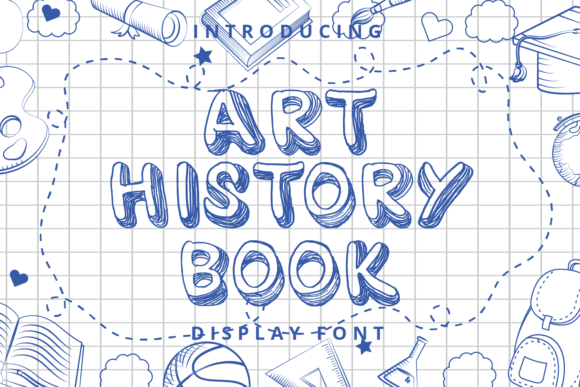
Art History Book: A Display Font with Vintage Soul
When you're working on a design that needs personality without sacrificing clarity, the typeface you choose becomes one of the most important decisions you'll make. Art History Book is a outlined display font that strikes a rare balance—it's distinctive enough to catch attention but clean enough to remain functional across a surprising range of applications. Its cute, approachable style gives it an endearing quality that works beautifully when you want your design to feel warm, creative, and a little bit playful.
At its core, Art History Book is a premium font with an outlined structure, meaning the letterforms are defined by their contours rather than filled-in strokes. This gives text a lighter, airier feel on the page or screen. The character shapes lean toward a friendly, slightly whimsical aesthetic—think rounded terminals, gentle curves, and a rhythm that feels handcrafted rather than mechanically produced. It's the kind of display font that immediately communicates a sense of creativity and thoughtfulness, which is exactly why so many designers keep reaching for it.
Where Art History Book Truly Shines
One of the strengths of Art History Book is its versatility across different project types. In logo design, the outlined style creates a memorable mark that doesn't overwhelm other visual elements. It pairs particularly well with simpler sans serif font choices for body copy, letting the logo stand out while maintaining a cohesive brand identity. For brand identity work—business cards, letterheads, stationery—the font adds a creative touch that helps small businesses and freelancers differentiate themselves from competitors relying on overused system fonts.
In editorial design and packaging design, Art History Book works well for headlines, pull quotes, and accent text. Its outlined nature means it can layer over images or colored backgrounds without creating visual heaviness. A food blogger designing recipe cards, for example, could use Art History Book for section headers while setting ingredient lists in a straightforward serif font or sans serif font. The contrast creates visual interest without sacrificing the readability that cooking instructions demand.
Digital applications are where this creative font really comes alive. Web design projects benefit from its lightweight visual footprint—it loads as vector-based type, so the outlined style doesn't add file weight the way a heavily ornamented script font might. Social media graphics are another natural fit. Instagram posts, Pinterest pins, and YouTube thumbnails all reward typefaces that stand out in a fast-scrolling feed, and Art History Book's distinctive silhouette does exactly that.
How the Right Display Font Shapes Perception
Typography does more than display words—it frames how people interpret your message. Choosing Art History Book signals something specific about your brand or project: that you value creativity, approachability, and a certain handmade warmth. This matters in modern typography because audiences have become remarkably adept at reading visual cues. A tech startup might gravitate toward geometric sans serifs, but a boutique bakery, a children's book author, or an independent craft studio would find Art History Book far more aligned with their personality.
The font also contributes to visual hierarchy in meaningful ways. Because it's designed for display use—headlines, titles, and prominent text—it naturally commands attention at larger sizes. Set your H1 or hero text in Art History Book, then pull back to a neutral body font for paragraphs, and you've created a clear reading path without needing bold colors or oversized elements. This kind of typographic contrast is one of the most reliable tools in a designer's toolkit, and Art History Book makes it easy to execute.
Consistency across touchpoints is another consideration. When you use a distinctive typeface like Art History Book across your website headers, email templates, packaging, and printed materials, you build recognition. People start associating that specific visual voice with your brand. It becomes shorthand for the experience you offer—creative, thoughtful, and a little unconventional.
Practical Tips for Working with Art History Book
Before committing to any commercial font, it's worth testing how it performs in your specific context. Start by reviewing what's included in the font package. Art History Book is a display font, so it's optimized for larger sizes. Check whether it includes multiple weights, stylistic alternates, or extended character sets—these extras can significantly expand your design options.
Font pairing is where many designers either elevate a project or stumble. Art History Book's outlined, playful nature works best alongside typefaces that provide contrast without competition. A clean sans serif font like Montserrat or Open Sans handles body text beautifully. If you prefer more traditional projects, a readable serif font such as Lora or Merriweather complements it well. Avoid pairing it with another decorative or handwritten font—the combination tends to feel cluttered and undermines the hierarchy you're trying to establish.
Readability deserves honest attention. At small sizes, outlined fonts can lose legibility, particularly on screens with lower resolution. Use Art History Book at 24px and above for web projects, and test it across devices. For print, 18pt is generally a comfortable minimum, though context matters—a business card headline at 14pt might work fine depending on the specific letter combinations in your text.
Licensing is the final practical checkpoint. As a premium font, Art History Book comes with specific usage terms. Verify that your license covers all intended applications—some design assets licenses differentiate between personal and commercial use, or between desktop and web embedding. If you're creating social media graphics for a client's brand, confirm the license permits that kind of distribution. Spending five minutes reading the licensing terms now prevents headaches later.
Making Art History Book Work for Your Next Project
The best way to know if a typeface fits your work is to set real content in it—not just "Lorem ipsum," but your actual headlines, your actual taglines, your actual product names. Art History Book rewards this kind of hands-on evaluation. Its outlined letterforms reveal their charm when they're carrying meaningful words, and you'll quickly see whether its personality aligns with your project's voice.
For entrepreneurs building a brand identity from scratch, this font offers a strong foundation for visual character without requiring a custom typeface budget. For designers managing multiple clients, it's a valuable addition to your library of design assets—the kind of font you'll reach for when a project calls for something expressive but not overdone. And for hobbyists, crafters, and content creators, Art History Book brings professional-quality modern typography to personal projects like invitations, blog headers, and handmade product labels.
Typography choices accumulate. Every font decision you make either reinforces or dilutes the story you're telling. Art History Book, with its outlined charm and adaptable personality, is the kind of choice that adds a chapter worth reading.